(pb; 1934, 2006. Translated from Japanese by Ian Hughes. "Introduction" by Mark Schreiber.)
From the back cover:
"A master criminal -- as deadly as she is beautiful -- wagers all in an epic battle with a master detective."
Review:
Black Lizard is a difficult-to-put-down, plot-pretzel crime thriller, infused with Rampo's hinted-at supernatural touches and psychologically twisted sexuality. It pits Akechi, the equivalent of Conan Arthur Doyle's Sherlock Holmes, against the Black Lizard (a.k.a. Midorikawa), Doyle's equivalent of Moriarty. (Akechi also appeared in other works by Rampo.)
The twists are not unexpected -- a fact Rampo acknowledges by directly addressing readers in jocular, knowing fashion. This does not detract from the dark joy of reading this sly, intense and perfect novel. Lizard is a landmark work, one worth owning.
#
Two film versions of this novel exist.
The first, translated into Japanese as Kurotokage, was released in Japan on March 14, 1962. Umetsugu Inoue directed the film, from Yukio Mishima and Kaneto Shindô's musical stage play.
Machiko
Kyô played Mrs. Midorikawa. Minori Ôku played Kogoro Akechi. Junko Kanô played Sanae Iwase. Hiroshi Kawaguchi played Jun Amemiya. Masao Mishima played Shobei Iwase. Sachiko Meguro played Mrs. Iwase.
#
The second version, titled Kuroto Kage, was directed by Kinji Fukasaku and released in Japan in 1968. Its screenplay was based on Yukio Mishima's stage adaptation and co-authored by Masashiga Narusawa.
Akihiro Miwa, billed Akihiro Maruyama, played Black Lizard. Isao Kimura played Detective Akechi. Kikko Matusoka played Sanaye. Jun Usami, billed as Junya Usami, played Shobei Iwase. Yûsuke Kawazu playec Junichi Amemiya.
Kô Nishimura played Private Detective Keiji Matoba. Toshiko Kabayashi played Hina. Sônsuke Oda played Harada. Kinji Hattori played Toyama.
Kurotokage playwright Yukio Mishima played a "Human Statue".
(pb; 1928. Translated from Japanese into English by Ian Hughes. "Introduction" by Mark Schreiber.)
From the back cover:
"A mystery writer vows to protect the woman he secretly loves from the Beast in the Shadows, but disaster strikes when he turns detective himself."
Review:
Hard to set down, this fascinating, unsettling mystery is a superb book, worth owning. Aside from a brief, chatty opening in the first chapter, this is a mostly concise exploration of revenge and other twisted subconscious motives and actions of its characters. Its denouement, along with the identity of Beast's main villain, is not shocking, but it is still a memorable and get-under-your-skin read.
(pb; 1932)
From the back cover:
"In Edogawa Rampo's Moju: The Blind Beast, a deranged, scarred and sightless sculptor kidnaps a model and imprisons her in a psychedelic labyrinth of giant sculpted eyes and other outlandish body parts, before dismembering her in a fearful blood-orgy. Her limbs, head and torso are later found scattered throughout Tokyo. The blind killer continues his sexually-charged spree of amputation and decapitation, claiming several more victims before finally presenting his work at an acclaimed art exhibition in which the sculptures are a little too life-like for comfort...
"The most disturbing of Rampo's novels, Moju: The Blind Beast is a classic of grinding horror and weird sex, tainted with a virulent black humour. It represents one of the earliest literary examples of the Japanese "erotic-grotesque" genre, in which such subjects as dismemberment, mutilation, coprophilia and cannibalism are presented in a perverse sexual context. This first-ever English translation of Rampo's classic is illustrated throughout and also includes an introduction by Jack Hunter, author of Eros In Hell."
Review:
Sensual, creepy, strange and hilarious in its skewering of human nature (particularly the art world and societal reactions to the macabre), this -- for this reader, anyway -- is the closest a book can come to perfection (for an 'erotic-grotesque' novel). Every scene is sharp, brutal and striking in its sensorial aspects, every word contributing to Moju's satirical dead-on effect. This is worth owning, if you are not a prude and are open to Rampo's acute, fetishistic violence and weirdness.
#
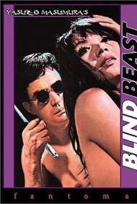
The resulting film, Blind Beast, which focuses on the first part of its source novel, was released in Japan on January 25, 1969. Its stateside release was in April 1969. Yasuzô Masamura directed it, from a screenplay by Yoshio Shirasaka.
Eiji Funakoshi played Michio. Mako Midori played Aki. Noriko Sengoku played Mother.
(pb; 2000: story anthology)
From the back cover
"Who do today's top horror writers read -- and why?
"This was the question posed to some of the most influential authors in the field toady. This book is their answer. Here are fifteen of the most memorable stories in the genre, each one personally selected by a well-known writer, and each prefaced by that writer's explanation of his and her choice. Here's your chance to enjoy familiar favorites, and perhaps discover some wonderful treasures. In each case, you'll have the opportunity to see the story from the perspective of a master of the field."
Overall review
Wonderful collection of horror stories, some famous, others off-beat and (somewhat) obscure -- overall, the story introductions, written by the authors who selected these stories, are interesting and engaging. Worth owning, this anthology.
Review, story by story
1.) "Sweets to the Sweet" - Robert Bloch: An abusive father unwittingly convinces his daughter that she's a "little witch." Predictable, taut-prosed, excellent (nonetheless), with a memorable finish. (Selected by Stephen King)
2.) "The Father-Thing" - Phillip K. Dick: Effective chiller about a ten-year old boy who discovers that his father, who's been killed, has spawned an alien twin. Classic; relatable, with its terrifying echoes of childhood. You probably won't forget this one for a long time -- if at all. (Selected by Ed Gorman)
3.) "The Distributor" - Richard Matheson: A seemingly-friendly man (Theodore Gordon), just moved into a surburban neighborhood, surreptitiously begins stirring up barely-buried resentments between his neighbors. Excellent for its adjective-restrained tone, scary in its real-world implications. (Selected by F. Paul Wilson)
4.) "A Warning to the Curious" - M.R. James: Loquacious, later creepy, tale about a man (Paxton) who foolishly unearths a seaside relic protecting a town against "invasion". An elevated sense of horror is displayed here, not spelled out for the reader, but effectively suggestive. (Selected by Ramsey Campbell)
"A Warning to the Curious" became a television short-film, airing in the UK on December 24, 1972. Peter Vaughn played Mr. Paxton. Clive Swift played Dr. Black. John Kearney played Ager/Ghost (the cinematic counterpart to William Ager). Lawrence Gordon Clark scripted, with no director listed.
5.) "Opening the Door" - Arthur Machen: A scholarly man, after having a "prophetic vision," goes missing and later reappears, with no memory of where he was. Long-winded, philosophical, sometimes funny, with carefully clarified words, it's an admirable piece -- Machen's skill is not to be denied -- but the ending is predictable and shockingly limp... so much so that when it did end, I went huh? (Selected by Peter Atkins)
6.) "The Colour Out of Space" - H.P. Lovecraft: A strangely-heated and rainbow-tinted meteorite lands on an Arkham, New England farm; wild, corrosive things (physical and mental) begin happening there. One of Lovecraft's best stories -- a miasmic, vivid nightmare of bright odd hues and blighting madness. It's also one of my favorite selections in this anthology. (Selected by Richard Laymon)
"The Colour Out of Space" became the source material for two movies.
The first film, Die, Monster, Die!, was released in the United States on October 27, 1965. (It also is titled Monster of Terror.) Boris Karloff starred as Nahum Witley (the cinematic counterpart to Nahum Gardner). Nick Adams played Steven Reinhart. Freda Jackson played Letitia Witley. Suzan Farmer played Susan Witley. Daniel Haller directed, from a script by Jerry Sohl.
The second film, The Curse, was released in the United States on September 11, 1987. Wil Wheaton played Zack. Claude Akins played Nathan. Malcolm Danare played Cyrus. John Schneider played Willis. Amy Wheaton (sister of actor Wil) played Alice. Actor David Keith, making his directorial debut, directed. Written by David Chaskin, Lovecraft's "Colour" is the uncredited source for Chaskin's script.
7.) "The Inner Room" - Robert Aickman: Long-winded, but solid tale about a little girl (Lene) who gets a forboding doll house, which later disappears. But is it really gone? The last third of the story is especially chilling, with a visually-memorable ending. (Selected by Peter Straub)
8.) "Young Goodman Brown" - Nathaniel Hawthorne: A young man takes a late-night stroll with the Devil, and witnesses some horrible truths about his fellow villagers. Classic, memorable. (Selected by Rick Hautala)
This story inspired two films.
The first film, La Nuit de Tom Brown, aired on French television on March 24, 1959. Michel Piccoli played "Tom, jeune". Jean-Marc Tennberg played Mephisto. Roger Carel played L'abbe Jefferson. Jean-Pierre Cassel played Toby. Claude Barma directed.
Young Goodman Brown was released in 1993. Tom Shell played Goodman Brown. Matt Adler played William Stacey. Mary Grace Canfield played Goody Cloyse. Melinda Clark played Faith Brown. John P. Ryan played The Devil. Peter George scripted and directed.
9.) "The Rats in the Walls" - H.P. Lovecraft: July 16, 1923 -- Anchester, England. A middle-aged, grieving man (Delapore), who's recently lost his son to war, begins renovating an ancient temple-house that once belonged to his family, many years before. Unswayed by local rumors of mysterious disappearances, bizarre cult worship, and murder by his ancestors, Delapore moves in.
However, when Delapore begins having recurring, intensity-escalating nightmares, and his cats (all eight of them, led by the unfortunately-named "Nigger-Man") start acting restless, sniffing and tearing at the ancient walls (which occasionally seem to bulge with the movements of rats), Delapore decides to explore the lower rooms of the architectural mish-mash that is his new home. He's helped by Captain Norrys (a wartime friend of Delapore's dead son) and his cats.
Creepy, atmospheric, historically-aware and -researched work: all trademarks of a Lovecraftian piece -- excellent, of course. (Selected by Michael Slade)
"The Rats in the Walls" made up part of the three-story cinematic horror anthology, Necronomicon, which was released on July 29, 1994 in the UK, after being shown at a few international film festivals in 1993. (The two other stories included in the anthology were "Cool Air" and "The Whisperer in the Darkness" -- it also had a wrap-around story, in which Jeffrey Combs played Lovecraft.)
In the "Rats" segment (Part/story 1, renamed "The Drawned"), Bruce Payne played Edward De Lapoer (old spelling of "Delapore"). Belinda Bauer played Nancy Gallmore. Richard Lynch played Jethro De Lapoer. Maria Ford played Clara. Christophe Gans directed and co-scripted this movie section, with help from co-scriptor Brent V. Friedman.
10.) "The Dog Park" - Dennis Etchison: Subliminal terror work where the fear of professional failure is as pervasive and dire as the threat of bloody death (it's set in Los Angeles). This is the kind of story that I wish I'd been able to read in my high school English classes and write an essay on, as it has nothing that would be deemed offensive (except to Hollywood-types), but leaves a lot to reader-interpretation... Etchison doesn't spoon-feed the story to his readers, but leaves a lot to his readers' imagination (especially at the end). Excellent, unsettling piece. (Selected by Richard Christian Matheson)
11.) "The Animal Fair" - Robert Bloch: A hitchhiker (Dave) catches a ride with a carny (Captain Ryder), who tells him about his tragic, startling life. Dark, different, fun. (Selected by Joe R. Lansdale)
12.) "The Pattern" - Ramsey Campbell: A painter (Tony) and his writer wife (Di) are enjoying their rented, quiet, back-country cottage when they start hearing afternoon screams from a nearby, empty field. When Tony looks into the possible source(s) of the screams, thing get really weird. Unpredictable, original, classic. (Selected by Poppy Z. Brite)
13.) "The Tell-Tale Heart" - Edgar Allan Poe: A murderer, wracked with mad guilt, waits for arrest -- or death. Famous, intense, wow-worthy.. of course, it's Poe. (Selected by Joyce Carol Oates)
This story has been filmed twenty-four times, for theatrical and video movies, as well as television shows. The first version was lensed in 1928; currently, two new versions are due to be released, the first in 2008, the second in 2009.
14.) "An Occurence at Owl Creek Bridge" - Ambrose Bierce: Famous story about a Civil War-era Federal scout who's about to be hanged. Shocking at the time of its publication (1891), its incredible end-twist has been done to death by countless hacks since then. Still, an effective story. (Selected by Dennis Etchison)
This story has been filmed five times. The first time was in 1929 (The Bridge); the most recent version, in 2005.
15.) "The Human Chair" - Edogawa Rampo: Odd, fascinating tale about a man who makes an oversized plush chair, large enough to comfortably house a man within it, and takes up part-time residence in it after it's shipped to a distant hotel. Crazily memorable, with an off-beat finish. (Selected by Harlan Ellison)
Ningen-isu (the Japanese translation of the story's title) was filmed in 2007 in Japan. Keisako Sato co-scripted and directed, with help from co-scriptor Aya Takei.