(hb; 2015)
From the inside flap:
". . . a woman travels to Casablanca, Morocco, on mysterious business. Almost immediately, while checking into her hotel, she is robbed, her passport and all identification stolen. The crime is investigated by the police, but the woman feels there is a strange complicity between the hotel staff and the authorities—she knows she’ll never see her possessions again.
"Stripped of her identity, she feels both burdened by the crime and liberated by her sudden freedom to be anyone at all. Then, a chance encounter with a film crew provides an intriguing opportunity: A producer sizes her up and asks, would she be willing to be the body-double for a movie star filming in the city? And so begins a strange journey in which she’ll become a stand-in—both on-set and off—for a reclusive celebrity who can no longer circulate freely in society while gradually moving further away from the person she was when she arrived in Morocco."
Review:
Diver's Clothes is a love-or-hate novel. Vida not only tells the story through a second-person point-of-view (told in the present tense, with lots of "you"s), but her protagonist -- a flighty, irrational woman -- often makes bizarre, ill-advised decisions that may be off-putting to some readers. (The reasons for the protagonist's irrationality are eventually, somewhat revealed.)
Normally, a book like this would not appeal to me. What compelled me to read Diver's Clothes was that I am a fan of Vida's work, which consistently has an exotic surreality, a dangerous dreaminess to it, as well as her swift-paced, turn-on-a-dime storytelling. Also, this book has the feel of Patricia Highsmith's The Talented Mr. Ripley, where the protagonists plunge headlong into unpredictable situations whilst panicking -- and trying not to think too long on the consequences of their wild, criminal decisions. (I am not the first person to note this; the same person who made the Vida-Highsmith connection also suggested an Alfred Hitchcock link, which makes sense: Hitchcock filmed a loosely adapted version of Highsmith's Strangers on a Train.)
If you can get past the second-person POV and the protagonist's bad decisions (which threaten to bury her even as their repercussions amass), this is a hard-to-put down read. The tale's finish is open-ended, keeping with the tone of what precedes it, with Vida providing sufficient foreshadowing to suggest that this, too, while a bad choice, is also an exhilarating (and character-true) one.
Borrow it or check this out from a library before you buy it, if you are iffy about Diver's Clothes: better to spend money on something where you are fairly certain you will like it.
Friday, March 25, 2016
Thursday, March 24, 2016
Cannibal Island by Michael Faun
(pb; 2014: novella)
From the back cover:
"In the 1920s, a British expedition sets out to investigate a crater caused by a meteorite on an uninhabited island in the Zanzibar archipelago -- a four-week-long journey by boat that culminates in a nightmare. But when they finally arrive at the island, no nightmare could compare to what they discover."
Review:
This entertaining, fast-moving homage to men's adventure magazines and cannibal films is a short and to-the-point read, one worth owning. Characters are well-sketched (familiar caricatured meat puppets who are funny, sometimes in a horrible ways), the sense of calamity ever-present and the gore (while intermittent) effective and vivid enough to pay proper respects to the genres which Faun clearly is smitten with. Fun, brief work, this -- worth your time and cash.
#
At the time of this writing, Faun has posted several exuberant Facebook posts pertaining to his current authorial endeavor: a sequel to Cannibal Island. When more information is available, I will update this review.
Saturday, March 19, 2016
High-Rise by J.G. Ballard
(pb; 1975)
From the back cover:
"Within the walls of an elegant forty-story tower block, the affluent tenants are hell-bent on an orgy of destruction. Cocktail parties degenerate into marauding attacks on 'enemy' floors, and the once-luxurious amenities become an arena for technological mayhem. In this visionary tale, human society slips into violent reverse as once-peaceful residents, driven by primal urges, re-create a world ruled by the laws of the jungle."
Review:
High-Rise is a timely, could-be-mistaken-for-prescient novel whose tone of almost-antiseptic, sociological distance consistently maintains a fine balance of showing gradual, deteriorating civility while simultaneously mimicking the form of an effectively paced thriller. Its multiple characters, who get varying amounts of 'air time,' are well-sketched out and their motives are understandable and clear, even when their behavior seems quirky and inconsistent -- that is, after all, an aspect of individuals, of human nature.
#
The resulting film is scheduled for stateside release on April 28, 2016. Ben Wheatley directed the film, from Amy Jump's screenplay.
Tom Hiddleston played Laing. Jeremy Irons played Royal. Sienna Miller played Charlotte. Luke Evans played Wilder. Elisabeth Moss played Helen. James Purefoy played Pangbourne. Keeley Hawes played Ann. Peter Ferdinando played Cosgrove.
From the back cover:
"Within the walls of an elegant forty-story tower block, the affluent tenants are hell-bent on an orgy of destruction. Cocktail parties degenerate into marauding attacks on 'enemy' floors, and the once-luxurious amenities become an arena for technological mayhem. In this visionary tale, human society slips into violent reverse as once-peaceful residents, driven by primal urges, re-create a world ruled by the laws of the jungle."
Review:
High-Rise is a timely, could-be-mistaken-for-prescient novel whose tone of almost-antiseptic, sociological distance consistently maintains a fine balance of showing gradual, deteriorating civility while simultaneously mimicking the form of an effectively paced thriller. Its multiple characters, who get varying amounts of 'air time,' are well-sketched out and their motives are understandable and clear, even when their behavior seems quirky and inconsistent -- that is, after all, an aspect of individuals, of human nature.
Fans of William Golding's Lord of the Flies and Ballard's Crash may well appreciate High-Rise's subtle underlying and black-hearted mirth even as the tenants enact escalating savagery and other tribal-minded displays. Those who like their thrills light-hearted and optimistic should avoid this book (as well as the movie) -- for them it may feel like an insufferably long nightmare of pointless nihilism.
This is a great book, one that may resonate well with those who are fascinated by (and sometimes horrified by) the darker corners of human nature and society, as well as tightly-written prose penned by a forward-looking wordsmith.
#
The resulting film is scheduled for stateside release on April 28, 2016. Ben Wheatley directed the film, from Amy Jump's screenplay.
Tom Hiddleston played Laing. Jeremy Irons played Royal. Sienna Miller played Charlotte. Luke Evans played Wilder. Elisabeth Moss played Helen. James Purefoy played Pangbourne. Keeley Hawes played Ann. Peter Ferdinando played Cosgrove.
Tuesday, March 15, 2016
Mucho Mojo by Joe R. Lansdale
(hb; 1994: second book in the Hap and Leonard series)
From the inside flap:
"Under the blister of a Texas sun, you distract your mind or watch it die. For Hap Collins, slaving in the rose fields of July, the diversion is fantasies of iced tea and willing women. For Leonard Pine's Uncle Chester, the mental deterioration is too fatally advanced. Dying in the slums of LaBorde, he no longer despises with the same passion his gay nephew Leonard. He ignores the crack house next door. And he forgets about what he'd buried under the floorboards of his house.
"He does remember to erect a forbidding 'bottle tree': a ragged post festooned with glass, designed to ward off black magic.
"When Leonard and his old friend Hap clean out Uncle Chester's house, they dig up a small skeleton, wrapped in pornographic magazines -- along with a grotesque link between an unsolved series of child murders and Leonard's late relative and guardian. Thinking white, Hap wants to call the police. But Leonard, intimate with the unwritten codes in his black part of town, persuades his partner to help clear Chester's name, sans outside reinforcement. Together, they unearth the deepest, ugliest truth of all."
Review:
Mucho builds on the Texas-based, neo-pulp-saturated world of Leonard Pine and Hap Collins (first introduced in Savage Season), resulting in another all-around entertaining and burn-through read in the Hap and Leonard series. As with Savage, Hap and Leonard's longtime friendship provides the banter-punctuated core around which the action revolves, the action this time perhaps more personal than that of the first book (Leonard's Uncle Chester may not have been as noble in his gruff worldview as he seemed).
This is another great read, an impressive, character-organic expansion in this series -- and, like its source novel, worth owning.
Followed by The Two-Bear Mambo.
Thursday, March 10, 2016
The Howling by Gary Brandner
(pb; 1977: first book in The Howling trilogy)
From the back cover:
"Karyn and her husband Roy had come to the peaceful California village of Drago to escape the savagery of the city. On the surface Drago appeared to be like most small rural towns.
"But it was not.
"The village had a most unsavory history. Unexplained disappearances, sudden deaths.
People just vanished, never to be found."
Review:
Howling is a waste-no-words, excellent read, one of my favorite werewolf works in the horror genre. It illustrates, in a cinematic, lycanthrophic and terror-toned manner, the disintegration of a marriage in the wake of a brutal, no-one-is-safe-anywhere rape, even as the husband and wife (Karen and Roy) change in startling ways.
At the time of this writing, this type of story has become common (with varying degrees of quality) in the horror genre. What sets Howling apart from other shape-shifter-based tales is Brandner's superb focus and editing, which keeps its storyline entertaining and palatable, without sacrificing the efficacy of its underlying, disturbing and personal themes.
This standout work is worth owning, one of the best furs-&-fangs genre entries of recent memory.
Followed by The Howling II.
#
The loosely linked, resulting film was released stateside on April 10, 1981. Joe Dante directed it, based on a script by John Sayles and Terence H. Winkless.
Dee Wallace played Karen White. Christopher Stone played R. William 'Bill' Neill. Dennis Duggan played Chris. Belinda Balaski played Terry Fisher. Kevin McCarthy played Fred Francis.
Patrick Macnee played Dr. George Waggner. John Carradine played Erle Kenton. Slim Pickens played Sam Newfield. Elisabeth Brooks played Marsha Quist. Robert Picardo played Eddie Quist. Don McLeod played T.C. Quist.
An uncredited Roger Corman played "Man in Phone Booth". An uncredited John Sayles (mentioned earlier as the film's co-screenwriter) played "Morgue Attendant". An uncredited Jonathan Kaplan played "Gas Station Attendant".
#
For those interested in the entire book series, all of the The Howling novels have been collected into one omnibus volume, The Howling Trilogy.
Saturday, March 05, 2016
Immobility by Brian Evenson
(hb; 2012)
From the inside flap:
"When you open your eyes things already seem to be happening without you. You don't know who you are and you don't remember where you've been. You know the world has changed, that a catastrophe has destroyed what used to exist before, but you can't remember exactly what did exist before. And you're paralyzed from the waist down apparently, but you don't remember that either.
"A man claiming to be your friend tells you your services are required. Something crucial has been stolen, but what he tells you about it doesn't quite add up. You've got to get it back or something bad is going to happen. And you've got to get it back fast, so they can freeze you again before your own time runs out.
"Before you know it, you're being carried through a ruined landscape on the backs of two men in hazard suits who don't seem anything like you at all, heading toward something you don't understand that may well end up being the death of you.
"Welcome to the life of Josef Horkai."
Review:
Immobility is a well-written, mainstream science fiction novel with its stark themes of religious faith and the catastrophic evils that result from those violent myopic "moralities". Immobility is better than Evenson's The Open Curtain, with its taut, highly visual writing, as well as a worthwhile plot twist. Good read, this: worth owning for fans of the early works of Stephen King and Dean Koontz.
Monday, February 29, 2016
Hard-Boiled Heart by Will Viharo
(hb; 2015: sixth book in the Vic Valentine series)
From the back cover:
"Older but hardly wiser, Vic Valentine finds himself in hot water again when he becomes embroiled with a movie star. Hollywood bad boy Charlie wants to make a film about the anachronistic private eye's tumultuous life. But when the alcoholic actor becomes a murder suspect, both Charlie's career and Vic's dreams are put on hold, forcing the duo to flee the fog of San Francisco for the rainy Pacific Northwest. There, Vic becomes erotically entangled with Raven, a voluptuous but vicious burlesque dancer, and is driven to despair by a supernatural stalker, a mysterious sailor statue named Ivar.
"Follow Vic through the mean streets of Seattle as he copes with middle-aged melancholia and confronts the demons from his past that threaten the guardian angels of his future."
Review:
The especially sharp editing and lightning-quick pacing in Hard-Boiled makes it one of my favorite Viharo books. On top of that -- keeping with his trademark style -- there are a lot of clever quips, real-life locale settings, as well as neo-pulp-worthy characters, deceit, mystery, violence and, of course, Valentine's horn-dog focus, even when confronted with the probability of pernicious death.
Like the rest of the Vic Valentine series, Hard-Boiled is a great read, own it already. Followed by Vic Valentine: International Man of Misery.
#
The first two chapters of Hard-Boiled were originally published in Bachelor Pad magazine, a burlesque-, tiki- and hybrid genre-themed periodical. "Private Dick, Public Enemy" appeared in its Summer 2012 "Nightcap Edition" issue. "Space Needle Fix" appeared in its Summer 2013 "Nightcap Edition #2" issue.
Friday, February 19, 2016
Moju: The Blind Beast by Edogawa Rampo
(pb; 1932)
From the back cover:
"In Edogawa Rampo's Moju: The Blind Beast, a deranged, scarred and sightless sculptor kidnaps a model and imprisons her in a psychedelic labyrinth of giant sculpted eyes and other outlandish body parts, before dismembering her in a fearful blood-orgy. Her limbs, head and torso are later found scattered throughout Tokyo. The blind killer continues his sexually-charged spree of amputation and decapitation, claiming several more victims before finally presenting his work at an acclaimed art exhibition in which the sculptures are a little too life-like for comfort...
"The most disturbing of Rampo's novels, Moju: The Blind Beast is a classic of grinding horror and weird sex, tainted with a virulent black humour. It represents one of the earliest literary examples of the Japanese "erotic-grotesque" genre, in which such subjects as dismemberment, mutilation, coprophilia and cannibalism are presented in a perverse sexual context. This first-ever English translation of Rampo's classic is illustrated throughout and also includes an introduction by Jack Hunter, author of Eros In Hell."
Review:
Sensual, creepy, strange and hilarious in its skewering of human nature (particularly the art world and societal reactions to the macabre), this -- for this reader, anyway -- is the closest a book can come to perfection (for an 'erotic-grotesque' novel). Every scene is sharp, brutal and striking in its sensorial aspects, every word contributing to Moju's satirical dead-on effect. This is worth owning, if you are not a prude and are open to Rampo's acute, fetishistic violence and weirdness.
#
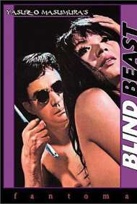
The resulting film, Blind Beast, which focuses on the first part of its source novel, was released in Japan on January 25, 1969. Its stateside release was in April 1969. Yasuzô Masamura directed it, from a screenplay by Yoshio Shirasaka.
Eiji Funakoshi played Michio. Mako Midori played Aki. Noriko Sengoku played Mother.
Sunday, February 14, 2016
The Open Curtain by Brian Evenson
(pb; 2006)
From the back cover:
When Rudd, a troubled teenager, embarks on a school project, he runs across a series of articles from the 1902 New York Times chronicling a vicious murder committed by the grandson of Brigham Young. Delving deeply into the Mormon ritual of blood sacrifice used in the murders, Rudd, along with his newly discovered half-brother, Lael, becomes swept up in the psychol"When Rudd, a troubled teenager, embarks on a school project, he runs across a series of articles from the 1902 New York Times chronicling a vicious murder committed by the grandson of Brigham Young. Delving deeply into the Mormon ritual of blood sacrifice used in the murders, Rudd, along with his newly discovered half-brother, Lael, becomes swept up in the psychological and atavistic effects of this violent, antique ritual.
"As the past and the present become an increasingly tangled knot, Rudd is found at the scene of a multiple murder at a remote campsite with minor injuries and few memories. Lyndi, the daughter of the victims, tries to help Rudd recover his memory and, together, they find a strength unique to survivors of terrible tragedies. But Rudd, desperate to protect Lyndi and unable to let the past be still, tries to manipulate their Mormon wedding ceremony to trick the priests (and God) by giving himself and Lyndi new secret names—names that match the killer and the victim in the one hundred-year-old murder. The nightmare has just begun."
Review:
Open is a slow-build, mostly well-edited psychological horror novel that is more suggestive than gory, steeped in Mormon history -- a history that most Mormons would deny or uncomfortably skim over. But not Rudd, whose dark investigations take a more modern, obsessive turn.
I write "mostly well-edited" because Open builds too slowly: some scenes could have been edited out, without creating a plot-hiccup in the largely predictable storyline, which dissolves into an overused haze of dream-twisty madness. The fact that Open is predictable is not a criticism -- Evenson is well aware of its predictability -- but the journey, for the most part, is interesting in its creeping-in, ritual-born insanity.
This is an overall-solid read from an author of talent and mainstream-ish leanings. If you like Dean Koontz or Stephen King's early writing style, you may like Evenson's Open as well.
Tuesday, February 09, 2016
Savage Season by Joe R. Lansdale
(audiobook; 1990: first book in the Hap and Leonard series)
From the back cover:
"Start with two best friends who practice martial arts in their free time: one a straight white guy, the other a black gay guy. Add a conniving ex-wife in a blue-jean miniskirt. Throw in half a million in a muddy creekbed somewhere near the Sabine River in East Texas. Add an ex-radical from the '60s and two naive idealists who want to save the world. Mix them all together in a half-assed plan, season with double-crosses, and then top it off with a hilarious and chilling drug dealer named Soldier. Bloody mayhem à la Lansdale."
The resulting television series, Hap and Leonard, debuted on the Sundance Channel on March 2, 2016. Its first season is based on Savage Season.
James Purefoy plays Hap Collins. Michael Kenneth Williams plays Leonard Pine. Christina Hendricks plays Trudy Fawst. Ron Roggé plays Bud Collins.
Bill Sage plays Howard. Neil Sandilands plays Paco. Jeff Pope plays Chub.
Jimi Simpson plays Soldier. Pollyanna McIntosh plays Angel. Trace Cheramie plays Softboy McCall.
From the back cover:
"Start with two best friends who practice martial arts in their free time: one a straight white guy, the other a black gay guy. Add a conniving ex-wife in a blue-jean miniskirt. Throw in half a million in a muddy creekbed somewhere near the Sabine River in East Texas. Add an ex-radical from the '60s and two naive idealists who want to save the world. Mix them all together in a half-assed plan, season with double-crosses, and then top it off with a hilarious and chilling drug dealer named Soldier. Bloody mayhem à la Lansdale."
Review:
Savage is an excellent, all-around entertaining and hard-to-put-down book. The novel's neo-pulpish, Texas-based drama and action of the storyline and its characters is made memorable by its lead characters, Hap Collins and Leonard Pine, whose laugh-out-loud rude banter provides an especially heartfelt core to Savage's proceedings. This is worth owning, and a promising start to the (thus far) fourteen-book series.
Followed by Mucho Mojo.
#
The resulting television series, Hap and Leonard, debuted on the Sundance Channel on March 2, 2016. Its first season is based on Savage Season.
James Purefoy plays Hap Collins. Michael Kenneth Williams plays Leonard Pine. Christina Hendricks plays Trudy Fawst. Ron Roggé plays Bud Collins.
Bill Sage plays Howard. Neil Sandilands plays Paco. Jeff Pope plays Chub.
Jimi Simpson plays Soldier. Pollyanna McIntosh plays Angel. Trace Cheramie plays Softboy McCall.
Thursday, February 04, 2016
Black Heart Metal Monster by Michael Faun
(pb; 2013: horror novella)
Storyline: When Throatbutcher, the lead singer of the black metal band Obscura Mortis, dies in an onstage accident, the remaining members of the band -- bassist Ateranimus, guitarist Nex and "batterist" (drummer) Skinreaper, as well as their manager, Tabitha -- commemorate his passing with a Satanic ritual. What they may (or may not know) is that while the surviving band members record their post-ritual record, a David Cronenberg-esque nightmare has begun inserting itself into their -- our -- world.
Review:
This black metal-immersive short horror work is an entertaining romp of ick, creeping horror (for the characters) and humor. Black metal aficionados may spot some real world events and elements in Monster, which further injects believability and impressive focus into this worth-owning novella.
Subscribe to:
Posts (Atom)