Showing posts with label favorite reads 2016. Show all posts

Monday, December 05, 2016

Elmore Leonard's 10 Rules of Writing by Elmore Leonard

(hb; 2001, 2007: nonfiction. Illustrated by Joe Ciardiello.)

From the inside flap:

"For aspiring writers and lovers of the written word, this concise guide breaks down the writing process with simplicity and clarity. From adjectives and exclamation points to dialect and hoopetedoodle, Elmore Leonard explains what to avoid, what to aspire to, and what to do when it sounds like 'writing' (rewrite)."


Review:

This short, lots-of-white-space nonfiction book about writing was originally published as an article in the New York Times (“Easy on the Adverbs, Exclamation Points and Especially Hooptedoodle”), so if you can get your hands on that, do so.


If you cannot access it that way, purchase this indispensable, direct and fast read that all writers should check out, if not own. Leonard was a master writer, and his rules – which are flexible, depending on the situation – are the key to more effective published works. This is one of my all-time favorite books about being a better author.)

Sunday, November 27, 2016

Evil and the Mask by Fuminori Nakamura

(hb; 2010, 2013. Translation from Japanese by Satoko Izumo and Stephen Coates.)

From the inside flap:

"When Fumihiro Kuki is eleven years old, his elderly, enigmatic father calls him into his study for a meeting. "I created you to be a cancer on the world," his father tells him. It is a tradition in their wealthy family: a patriarch, when reaching the end of his life, will beget one last child to cause misery in a world that cannot be controlled or saved. From this point on, Fumihiro will be specially educated to learn to create as much destruction and unhappiness in the world around him as a single person can. Between his education in hedonism and his family's resources, Fumihiro's life is one without repercussions. Every door is open to him, for he need obey no laws and may live out any fantasy he might have, no matter how many people are hurt in the process. But as his education progresses, Fumihiro begins to question his father's mandate, and starts to resist."


Review:

Evil is a rare thing: it is a perfect novel that works on all levels – emotional, plotwise, character-wise and action-wise. I would not change one word of this original, disturbing and intense work, whose ties to real world history serve to imbue Evil with a resonance it might otherwise lack. This, of course, is worth owning, an entertaining, provocative and landmark neo-pulp book.

Saturday, October 15, 2016

The Black Lizard by Edogawa Rampo

(pb; 1934, 2006. Translated from Japanese by Ian Hughes. "Introduction" by Mark Schreiber.)

From the back cover:

"A master criminal -- as deadly as she is beautiful -- wagers all in an epic battle with a master detective."


Review:

Black Lizard  is a difficult-to-put-down, plot-pretzel crime thriller, infused with Rampo's hinted-at supernatural touches and psychologically twisted sexuality. It pits Akechi, the equivalent of Conan Arthur Doyle's Sherlock Holmes, against the Black Lizard (a.k.a. Midorikawa), Doyle's equivalent of Moriarty. (Akechi also appeared in other works by Rampo.)

The twists are not unexpected -- a fact Rampo acknowledges by directly addressing readers in jocular, knowing fashion. This does not detract from the dark joy of reading this sly, intense and perfect novel. Lizard is a landmark work, one worth owning.

  #

Two film versions of this novel exist.

The first, translated into Japanese as Kurotokage, was released in Japan on March 14, 1962. Umetsugu Inoue directed the film, from Yukio Mishima and Kaneto Shindô's musical stage play.

Machiko Kyô played Mrs. Midorikawa. Minori Ôku played Kogoro Akechi. Junko Kanô played Sanae Iwase. Hiroshi Kawaguchi played Jun Amemiya. Masao Mishima played Shobei Iwase. Sachiko Meguro played Mrs. Iwase.


#


The second version, titled Kuroto Kage, was directed by Kinji Fukasaku and released in Japan in 1968. Its screenplay was based on Yukio Mishima's stage adaptation and co-authored by Masashiga Narusawa.

Akihiro Miwa, billed Akihiro Maruyama, played Black Lizard. Isao Kimura played Detective Akechi. Kikko Matusoka played Sanaye. Jun Usami, billed as Junya Usami, played Shobei Iwase. Yûsuke Kawazu playec Junichi Amemiya.

Kô Nishimura played Private Detective Keiji Matoba. Toshiko Kabayashi played Hina. Sônsuke Oda played Harada. Kinji Hattori played Toyama.

Kurotokage playwright Yukio Mishima played a "Human Statue".


Sunday, October 02, 2016

The Thief by Fuminori Nakamura

(hb; 2009, 2012. Translated from Japanese by Satoko Izumo and Stephen Coates)

From the inside flap:

"The Thief is a seasoned pickpocket. Anonymous in his tailored suit, he weaves in and out of Tokyo crowds, stealing wallets from strangers so smoothly sometimes he doesn’t even remember the snatch. Most people are just a blur to him, nameless faces from whom he chooses his victims. He has no family, no friends, no connections.... But he does have a past, which finally catches up with him when Ishikawa, his first partner, reappears in his life, and offers him a job he can’t refuse. It’s an easy job: tie up an old rich man, steal the contents of the safe. No one gets hurt. Only the day after the job does he learn that the old man was a prominent politician, and that he was brutally killed after the robbery. And now the Thief is caught in a tangle even he might not be able to escape."


Review:

Thief is an excellent, fast-paced and word-spare crime tale, told from the first-person point-of-view of the Thief, whose emotional journey from jaded loner pickpocket to reluctant protector of a boy is marked by occasional violence and the predations of Kizaki, a master criminal with a dangerous political agenda – an agenda that may result in the Thief’s death.

Thief, a pulp-to-its-core read, is worth owning. This is a thematic counterpart work to  The Kingdom.

Thursday, September 08, 2016

Blood Father by Peter Craig

(pb; 2005) 

From the back cover:

"Lydia Carson is an accident waiting to happen. Strung out, she's always running from disaster, and more often she's running right into it. Now at seventeen, Lydia has stumbled onto real trouble. Not only has she witnessed a brutal murder perpetrated by her boyfriend, but his minions are out to make sure that she doesn't have a story to tell the police.

"John Link is a former Hell's Angel, an ex-con, trying to stay clean and sober while running a tattoo parlor from the kitchen of his trailer home. He's also Lydia's long-estranged father, and when both the police and her boyfriend's thugs are hot on Lydia's trail, Link becomes Lydia's only hope."


Review:

Blood  is an edgy, excellent drama-with-action novel with a strong story, characters who resonate as real people and concise writing, whether Craig is penning a quiet, regret-tinged moment between Lydia and Link or an explosive car chase-shootout scene. The heart and impetus of Blood is Link and Lydia's relationship, as it builds into something better. Everything fits here, there are no wasted words -- this is worth owning and it is one of my favorite reads of this year.

#

The film version was released stateside on August 26,2016. Jean François-Richet directed it, from a screenplay by the book's author and Andrea Berloff.

Mel Gibson played Link. Erin Moriarty played Lydia Carson. Diego Luna played Jonah. William H. Macy played Kirby. Miguel Sandoval played Arturo Rios.

Michael Parks played Preacher. Dale Dickey played Cherise. Richard Cabral played Joker. Daniel Macada played Choop.Raoul  Ryan Dorsey played Shamrock. Max Trujillo, billed as Raoul Trujillo, played The Cleaner.

Friday, July 29, 2016

The Venus Complex by Barbie Wilde

(pb; 2012. Cover painting by Daniele Serra.)

From the back cover:

"A man rises out of an abyss of frustration and rage and creates works of art out of destruction, goddesses out of mere dental hygienists and beauty out of death. It's also about the sickness and obsession that is love.

"Enter into Michael [Friday]'s world through the pages of his personal journal, where every diseased thought, disturbing dream, politically incorrect rant and sexually explicit murder highlights his journey from zero to psycho."


Review:

Venus is an unsettling, wry and humanity-based-horror serial killer novel, one that details the emotional path of its clever protagonist, Michael Friday, as he evolves into an almost-relatable killer, trying to work his way into the affections of Elene Sheppard, a professor of psychology and profiler of serial killers.

This is a quiet-landmark work, one that builds upon Brett Eason Ellis' American Psycho (with better editing and better writing) while layering on its own distinctive personality and not-quite-psycho lead character, whose alchemy- and art-based sexual kills explicitly spell out his path to imagined love.  Venus, a sly, excellent (and not for the squeamish) book, is worth owning if you can stomach disturbing cultural insights, snuff scenes and smart-minded death.


Friday, July 15, 2016

Village of the Mermaids by Carlton Mellick III

(pb; 2013: novella)

From the back cover:

"MERMAID [mur-meyd] "noun" -- a rare species of fish evolved to resemble the appearance of a woman in order to attract male human prey. Mermaids are protected by the government under the Endangered Species Act, which means you aren't able to kill them even in self-defense. This is especially problematic if you happen to live in the isolated fishing village of Siren Cove, where there exists a healthy population of mermaids in the surrounding waters that view you as the main source of protein in their diet.

"The only thing standing between you and the ravenous sea women is the equally-dangerous supply of human livestock known as Food People. Normally, these "feeder humans" are enough to keep the mermaid population happy and well-fed. But in Siren Cove, the mermaids are avoiding the human livestock and have returned to hunting the frightened local fishermen. It is up to Doctor Black, an eccentric representative of the Food People Corporation, to investigate the matter and hopefully find a way to correct the mermaids' new eating patterns before the remaining villagers end up as fish food."

"Like a Lovecraftian version of David Lynch's Twin Peaks, Village of the Mermaids is a dystopian mystery for the bizarro fiction fan. It proves, once again, how cult author Carlton Mellick III brings the weird to a whole new level."


Review:

Short (111 pages), waste-no-words, mysterious, atmospheric, creepy, full of odd humor, twists, turns and interesting characters, this novella lives up to its bizarro classification, one of the best I have read in the genre, and one of the best I have read this year. Village is worth owning.

Monday, May 23, 2016

Rumble Tumble by Joe R. Lansdale

(hb; 1998: fifth book in the Hap and Leonard series)

From the back cover:

"Hap Collins is hitting the hard edge of a midlife crisis. By night, he's bouncing at a local club. By day, he's living by the grace of his best friend -- black, gay Vietnam vet Leonard Pine -- and his good woman, former Sweet Potato Queen Brett Sawyer. Hap may be down, but he's a long throw from out.

"That's the good news. He'll need it for the bad news.

"Brett's daughter, Tillie, who is turning tricks and taking drugs, stands in need of a quick and merciful rescue. It will be no easy chore, starting with a hard trek from mosquito-ridden but familiar LaBorde, Texas, to the fleshpots and hardasses of Hootie Hoot, Oklahoma.

"On the road the trio picks up new friends, like a hulking Pentecostal preacher and retired hitman, as well as fresh enemies, including a redheaded midget with a giant chip on his shoulder and an army of bikers turned vice profiteers and cold-blooded killers."


Review:

Rumble is one of my favorite Hap and Leonard novels thus far. Like previous books, it is an excellent, entertaining pulp stew of action, cinematic-worthy and humorous dialogue, bigger-than-life characters and bloody action. At the heart of Rumble, as with other Hap and Leonard works, the core of the book is the titular characters' banter-punctuated sense of brotherhood.

This is worth owning, as are the previous novels in this series -- Rumble is followed by Veil's Visit: a Taste of Hap and Leonard (a side-story anthology, an expensive collector's item) and Captains Outrageous.

Monday, April 11, 2016

Points and Lines by Seicho Matsumoto

(hb;1958: translated by Makiko Yamamoto and Paul C. Blum)

From the back cover:

"A senior official in a ministry tainted with scandal. A dining car receipt. A name missing from a passenger list. And a young man and woman dead on a beach in an apparent suicide. Disconnected points, but not to a determined detective who keeps searching for the lines that link the living and the dead."


Review:

Points is a clever, word-exact police procedural that immediately immersed me with its crisp, hyper-focused prose and well-sketched characters (as well as its Japanese milieu and abbreviated social commentary). This is a compelling how-the-crime-was-committed read, worth owning.

Tuesday, April 05, 2016

The Two-Bear Mambo by Joe R. Lansdale

(hb; 1995: third book in the Hap and Leonard series)

From the inside flap:

"Florida Grange, Leonard's drop-dead gorgeous lawyer and Hap's former lover, has vanished in Klan-infested Grovetown while in pursuit of the real story behind the jailhouse death of a legendary bluesman's blackguard son. Fearing the worst, Hap and Leonard set out to do the kind of investigating the good ole boy cops can't - or won't - do. In Grovetown they encounter a redneck police chief, a sadistic Christmas tree grower, and townsfolk itchin' for a lynchin'. Add to this a dark night exhumation in a voodoo graveyard, a thunderstorm of Biblical proportions, and flat-out sudden murder. Hap and Leonard vow to face the hate and find Florida, even if Leonard has to put a hole in anyone who gets in the way. Besides, they've packed a lunch."


Review:

This third entry in the Hap and Leonard series is darker, more violent and harrowing than its predecessor books, Savage Season and Mucho Mojo. When Leonard Pine and Hap Collins' investigation into the disappearance of Hap's ex-girlfriend (Florida) leads them into an entire town populated by pernicious racists, even Hap and Leonard's junkyard dog attitudes, trenchant wits and general bad-assery may not be enough to pull them through this rain-drenched nightmare that will shake them to their cores.

Two-Bear is my favorite Hap and Leonard novel thus far, another impressive, character-expansive work. This, like its previous books, is worth owning.

Followed by Bad Chili.

Thursday, March 31, 2016

Dracula by Bram Stoker

(pb; 1897)

Review:

Told through a series of various characters' journals, notes and cables, this nineteenth-century, milestone novel of vampirism, slow-burn horror, desire and other emotions is an enthralling, descriptive work, one that deservedly has been acknowledged as the blueprint for most vampire-themed art and writing. Stoker crafted the perfect bloodsucker book when he wrote this (I rarely use the word "perfect" to describe any writing); for this reason, this is one of my all-time favorite reads.

#

Dracula has inspired so many other works, visual, literary, aural and cinematic, I will not even attempt to show the creative strands stemming from it.

Thursday, March 10, 2016

The Howling by Gary Brandner

(pb; 1977: first book in The Howling trilogy)

From the back cover:

"Karyn and her husband Roy had come to the peaceful California village of Drago to escape the savagery of the city. On the surface Drago appeared to be like most small rural towns. 

"But it was not.


"The village had a most unsavory history. Unexplained disappearances, sudden deaths.
People just vanished, never to be found."


Review:

Howling is a waste-no-words, excellent read, one of my favorite werewolf works in the horror genre. It illustrates, in a cinematic, lycanthrophic and terror-toned manner, the disintegration of a marriage in the wake of a brutal, no-one-is-safe-anywhere rape, even as the husband and wife (Karen and Roy) change in startling ways.

At the time of this writing, this type of story has become common (with varying degrees of quality) in the horror genre. What sets Howling apart from other shape-shifter-based tales is Brandner's superb focus and editing, which keeps its storyline entertaining and palatable, without sacrificing the efficacy of its underlying, disturbing and personal themes.

This standout work is worth owning, one of the best furs-&-fangs genre entries of recent memory.


Followed by The Howling II.

#

The loosely linked, resulting film was released stateside on April 10, 1981. Joe Dante directed it, based on a script by John Sayles and Terence H. Winkless.

Dee Wallace played Karen White. Christopher Stone played R. William 'Bill' Neill. Dennis Duggan played Chris. Belinda Balaski played Terry Fisher. Kevin McCarthy played Fred Francis.
Patrick Macnee played Dr. George Waggner. John Carradine played Erle Kenton. Slim Pickens played Sam Newfield. Elisabeth Brooks played Marsha Quist. Robert Picardo played Eddie Quist. Don McLeod played T.C. Quist.

An uncredited Roger Corman played "Man in Phone Booth". An uncredited John Sayles (mentioned earlier as the film's co-screenwriter) played "Morgue Attendant". An uncredited Jonathan Kaplan played "Gas Station Attendant".

#

For those interested in the entire book series, all of the The Howling novels have been collected into one omnibus volume, The Howling Trilogy.


Monday, February 29, 2016

Hard-Boiled Heart by Will Viharo


(hb; 2015: sixth book in the Vic Valentine series)

From the back cover:

"Older but hardly wiser, Vic Valentine finds himself in hot water again when he becomes embroiled with a movie star. Hollywood bad boy Charlie wants to make a film about the anachronistic private eye's tumultuous life. But when the alcoholic actor becomes a murder suspect, both Charlie's career and Vic's dreams are put on hold, forcing the duo to flee the fog of San Francisco for the rainy Pacific Northwest. There, Vic becomes erotically entangled with Raven, a voluptuous but vicious burlesque dancer, and is driven to despair by a supernatural stalker, a mysterious sailor statue named Ivar.

"Follow Vic through the mean streets of Seattle as he copes with middle-aged melancholia and confronts the demons from his past that threaten the guardian angels of his future."


Review:

The especially sharp editing and lightning-quick pacing in Hard-Boiled makes it one of my favorite Viharo books. On top of that -- keeping with his trademark style -- there are a lot of clever quips, real-life locale settings, as well as neo-pulp-worthy characters, deceit, mystery, violence and, of course, Valentine's horn-dog focus, even when confronted with the probability of pernicious death.

Like the rest of the Vic Valentine series, Hard-Boiled is a great read, own it already. Followed by Vic Valentine: International Man of Misery.

#

The first two chapters of Hard-Boiled were originally published in Bachelor Pad magazine, a burlesque-, tiki- and hybrid genre-themed periodical. "Private Dick, Public Enemy" appeared in its Summer 2012 "Nightcap Edition" issue. "Space Needle Fix" appeared in its Summer 2013 "Nightcap Edition #2" issue.

Friday, February 19, 2016

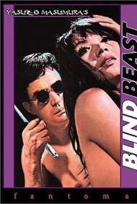
Moju: The Blind Beast by Edogawa Rampo

(pb; 1932)

From the back cover:

"In Edogawa Rampo's Moju: The Blind Beast, a deranged, scarred and sightless sculptor kidnaps a model and imprisons her in a psychedelic labyrinth of giant sculpted eyes and other outlandish body parts, before dismembering her in a fearful blood-orgy. Her limbs, head and torso are later found scattered throughout Tokyo. The blind killer continues his sexually-charged spree of amputation and decapitation, claiming several more victims before finally presenting his work at an acclaimed art exhibition in which the sculptures are a little too life-like for comfort...

"The most disturbing of Rampo's novels, Moju: The Blind Beast is a classic of grinding horror and weird sex, tainted with a virulent black humour. It represents one of the earliest literary examples of the Japanese "erotic-grotesque" genre, in which such subjects as dismemberment, mutilation, coprophilia and cannibalism are presented in a perverse sexual context. This first-ever English translation of Rampo's classic is illustrated throughout and also includes an introduction by Jack Hunter, author of Eros In Hell."


Review:

Sensual, creepy, strange and hilarious in its skewering of human nature (particularly the art world and societal reactions to the macabre), this -- for this reader, anyway -- is the closest a book can come to perfection (for an 'erotic-grotesque' novel). Every scene is sharp, brutal and striking in its sensorial aspects, every word contributing to Moju's satirical dead-on effect. This is worth owning, if you are not a prude and are open to Rampo's acute, fetishistic violence and weirdness.

#

The resulting film, Blind Beast, which focuses on the first part of its source novel, was released in Japan on January 25, 1969. Its stateside release was in April 1969.
Yasuzô Masamura directed it, from a screenplay by Yoshio Shirasaka.

Eiji Funakoshi played Michio. Mako Midori played Aki. Noriko Sengoku played Mother.

Thursday, January 14, 2016

Lafayette in the Somewhat United States by Sarah Vowell

(hb; 2015: nonfiction)

From the inside flap:

"On August 16, 1824, an elderly French gentlemen sailed into New York Harbor and giddy Americans were there to welcome him. Or, rather, to welcome him back. It had been thirty years since the Revolutionary War hero the Marquis de Lafayette had last set foot in the United States, and he was so beloved that 80,000 people showed up to cheer for him. The entire population of New York at the time was 120,000.

"Lafayette's arrival in 1824 coincided with one of the most contentious presidential elections in American history, Congress had just fought its first epic battle over slavery, and the threat of a Civil War loomed. But Lafayette, belonging to neither North nor South, to no political party or faction, was a walking, talking reminder of the sacrifices and bravery of the revolutionary generation and what they wanted this country to be. His return was not just a reunion with his beloved Americans, it was a reunion for Americans with their own astonishing singular past.

"Lafayette in the Somewhat United States is a humorous and insightful portrait of the famed Frenchman, the impact he had on our young country, and his ongoing relationship with some of the instrumental Americans of the time, including George Washington, Alexander Hamilton, Thomas Jefferson, and many more."


Review:

Witty, informative and intriguing, Vowell's in-depth recounting of Marquis de Lafayette and his involvement in America's Revolutionary War (as well as its other personalities and consequences) is an excellent read, one that I found difficult to set down. This is one of Vowell's best books -- her wry and fleet-footed observations are consistently amusing and the full force of the personalities involved (George Washington, Ben Franklin, etc.) are concisely shown: worth owning, this.